
When your days blend together, small changes can shift everything. Routines may slip, but rebooting your daily structure is possible with the right strategies and mindset.
Many people seek better habits because productive, balanced routines support well-being. Exploring daily routine improvement unlocks clarity, reduces stress, and helps you focus on what matters most, not just what feels urgent.
This guide walks you through concrete steps and examples for daily routine improvement. Discover methods, scripts, and real-life approaches you can adopt for lasting structure and calm.
Set Anchors for Stability That Guide Your Decisions
Anchors provide mental cues that signal key moments of each day. These fixed points shape your time, removing the guesswork from daily routine improvement and reducing wasted energy.
When you define core anchors—like a consistent wake-up time or midday walk—you lessen decision fatigue and create reliability. Anchors create a feeling of home base within any schedule shift.
Morning Anchors to Start with Strength
Instead of hitting snooze, set a phone alarm across the room. Walking to turn it off signals commitment to daily routine improvement and can reduce drowsiness right away.
Pair your first task with a sensory cue: sunlight, fresh air, or water. Drinking a glass of water while stretching becomes a simple behavioral anchor you can fall back on anytime.
Even five minutes spent making your bed or clearing a space tells your mind the day has begun, giving immediate structure and a positive momentum for daily routine improvement.
Evening Anchors to Signal the Day’s End
Choose a phrase to mark transition—say, “Day’s done, relax begins.” Saying this aloud while closing your laptop or dimming lights primes your brain for rest and signals routine closure.
Use a physical object, like setting a book on your pillow, as a visual anchor that prompts winding down. Over time, this simple move consistently cues relaxation without effort.
Pairing relaxing music with a tidy-up routine generates a calming close. You reinforce a sense of order while supporting sleep quality—a critical part of daily routine improvement.
| Anchor Category | Example Action | Primary Benefit | Takeaway |
|---|---|---|---|
| Morning Anchor | Drink water & open curtains | Mental alertness boost | Start each day by pairing hydration with natural light |
| Workday Anchor | Stand & stretch at 10am | Improved focus & posture | Time-block breaks to refresh your body and mind |
| Meal Anchor | Lunch at 12:30pm | Balanced energy | Eat at regular intervals for stable mood and performance |
| Evening Anchor | Read before bed | Faster relaxation | Create a nightly tradition for smoother sleep transitions |
| Reset Anchor | Deep breath and smartphone off at 6pm | Reduces stimulation | Implement end-of-day digital boundaries |
Batch Similar Tasks and Free Up Mental Bandwidth
Grouping similar activities together sheds context-switching fatigue. You’ll finish tasks faster and with less friction, which means greater focus for daily routine improvement.
Transitioning from task to task drains energy. Batching creates momentum. If you organize errands, emails, or chores in blocks, you spend less time re-orienting and more time in flow.
Task Batching with Micro-Processes
Reserve blocks for specific themes. For example, handle all email between 9–9:30am, then switch to deep work. Repeat scripts like “I check messages now; I’ll respond quickly, then move on.”
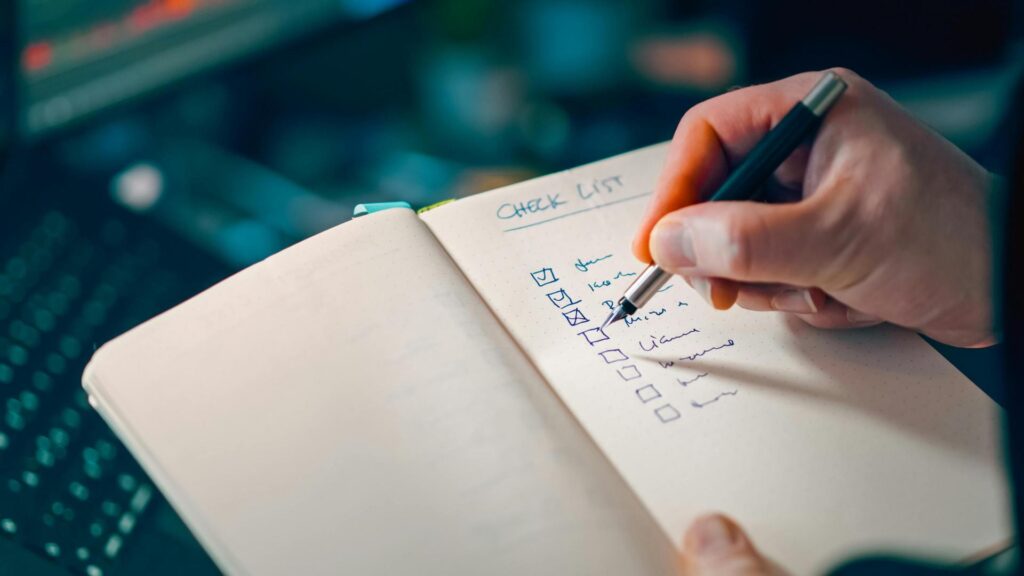
Batches work best when you write short checklists. Jot, “Scan inbox, reply to clients, archive old mail” for your batch. Start, follow the script, then close the session—don’t linger.
- Group errands by location: Plan stops to save time driving, cut down on stress, and create a sense of mastery over your schedule.
- Batch meal prep: Cook ahead for several days to support better nutrition and avoid decision fatigue at dinnertime, making daily routine improvement easier.
- Handle digital tasks at once: Schedule online bill payments, renewals, and digital paperwork together to decrease cognitive clutter and encourage better daily routine improvement.
- Sort chores by room: Clean the kitchen fully before moving to another space, so no energy is wasted shifting focus or switching tools between tasks.
- Process paperwork in a single sprint: Collect forms, sign, and file all documents in one go to promote a clean workspace and smoother daily routine improvement.
Batches shrink big to-do lists into a handful of focused sessions. The goal is to finish, not multitask. Stick to closing one batch before opening the next.
Momentum with Theme Days
Assigning each weekday a focus biases your attention. For example, Mondays are for meetings, Tuesdays for freelance work, Wednesdays feature creative time, and so on.
Write this theme plan out: “I meet on Monday so I’m sharper elsewhere. If someone asks about another topic, I reply: ‘Let’s put that on Thursday’s list.’”
- Dedicate a “financial Friday” to all banking and budgeting: This reduces anxiety on other days, which supports continuous daily routine improvement through routine boundaries.
- Declare “Wellness Wednesday” for workouts and checkups: That way, health tasks don’t get crowded out, ensuring regularity and progress for daily routine improvement.
- Use “Project Thursday” as the deep-focus block: Tell family or colleagues, “I won’t answer calls before 2pm on Thursdays; that’s when I push my projects forward.”
- Set “Planning Sunday” every week: Reflect, map goals, and prepare your week to reinforce daily routine improvement and keep surprises manageable.
- Choose one evening as “Tech-Free Night”: Switch off screens early and engage offline, supporting better sleep habits and promoting more mindful daily routine improvement.
This practice grows personal agency. It encourages meaningful rituals and conversation scripts—like, “Let’s move that to Friday”—that make your routine resilient.
Create Visual Triggers and Sustainable Mini-Habits
Placing strategic reminders in your environment changes the way you respond each day. When you see cues, you’re nudged to follow through on your plans for daily routine improvement.
Small, consistent actions add up. Mini-habits—like setting out workout clothes or prepping breakfast ingredients—remove friction and lower the barrier to action.
Prompts That Guide Your Attention
Create “If–then” cues: “If I see my walking shoes by the door, then I walk after lunch.” This language links a trigger to an immediate action, making habits more reliable.
Visual signals make intentions hard to ignore. An open planner on your desk or sticky notes signaling ‘call mom at 5pm’ can structure each step of your daily routine improvement.
The point isn’t perfection but noticing momentum. A visible water bottle or book invites repeated action, even if life interrupts, making re-engagement with your routine quicker.
Stack Tiny Habits for Maximum Effect
Choose a core activity you do daily and attach a new mini-habit to it. “After brushing my teeth, I’ll jot down three things for tomorrow’s list.”
Start with a change so small it feels trivial, like one push-up post-coffee. This tactic builds credibility with yourself and makes daily routine improvement sustainable, not overwhelming.
Layer habits in sequence: breakfast prep leads to vitamins, which leads to five deep breaths before work. This chain effect expands routines naturally, not forcefully.
Small Shifts, Reliable Gains: The Path Forward
Changing daily routine improvement hinges on realistic habits that fit your life—not on willpower alone. Every anchor, batch, and visual cue described above can fit busy lives with a little intention.
Building structure that sticks requires practice, not perfection. By leaning on small wins and repeating them, daily routine improvement becomes a process you can trust, not a fleeting project.
Over time, your new routines reveal energy, head space, and calm you can feel each evening. Start today—choose one anchor, batch, or habit, and let your daily routine improvement unfold.